
Opiate Addiction Treatment in In Metro Atlanta, GA
Home / Addictions We Treat / Opioid Addiction Treatment Center in Georgia
Top-Rated Opioid Addiction Treatment Center in Georgia
Opiate addiction treatment provides medically supervised care that helps individuals safely stop opioid use, manage withdrawal symptoms, and build long-term recovery. At Southeast Detox, we offer comprehensive, evidence-based treatment for opioid use disorder that combines medical detox for opioid use, medication-assisted treatment (MAT), therapy, and relapse prevention planning.
If you or a loved one is struggling with opioid dependence, professional treatment can provide the structure, medical support, and guidance needed to safely begin recovery.

Have questions about what treatment will look like for you?
Our team can walk you through each step so you know exactly what to expect before you start.
The Opioid Crisis in Georgia
Georgia continues to face a growing opioid crisis, with rising rates of overdose deaths linked to prescription opioids, heroin, and synthetic opioids like fentanyl. Many individuals initially use opioids to manage pain but develop physical dependence that makes stopping without medical support difficult and potentially dangerous.
Seeking professional opiate addiction treatment can significantly reduce the risk of overdose, improve physical health, and provide long-term recovery support.
What Is Opiate Addiction Treatment?
Opiate addiction treatment is a structured medical and therapeutic process designed to help individuals safely stop opioid use and maintain long-term recovery. Because opioid dependence affects both the brain and body, effective treatment typically includes a combination of:
- Medical detox to manage withdrawal symptoms
- Medication-assisted treatment (MAT) to reduce cravings
- Behavioral therapies to address underlying causes of use
- Relapse prevention and aftercare planning
This comprehensive approach helps individuals stabilize physically while also developing the emotional and psychological skills needed for lasting recovery.
Signs You May Need Opiate Addiction Treatment
You or a loved one may benefit from professional opioid addiction treatment if you are experiencing:
- Strong cravings for opioids
- Withdrawal symptoms when not using
- Using more opioids than intended
- Difficulty stopping despite negative consequences
- Increased tolerance requiring higher doses
- Impact on work, relationships, or mental health
Early treatment can prevent worsening dependence and reduce the risk of overdose or long-term health complications.
If any of these signs feel familiar, you’re not alone — and help is available.
A confidential conversation can help you understand your options and next steps.
Medical Detox for Opiate Addiction
Medical detox is often the first step in opiate addiction treatment. During detox, individuals receive 24/7 medical supervision to safely manage withdrawal symptoms such as nausea, muscle aches, anxiety, insomnia, and intense cravings.
Because opioid withdrawal can be physically and emotionally distressing, medically supervised detox helps ensure comfort, safety, and stabilization before beginning ongoing treatment.
Medication-Assisted Treatment (MAT) for Opioid Addiction
Medication-assisted treatment is one of the most effective, evidence-based approaches for opioid use disorder. MAT uses FDA-approved medications combined with therapy to reduce cravings and prevent relapse.
Common medications used in opiate addiction treatment include:
- Buprenorphine (Suboxone) to reduce cravings and withdrawal symptoms
- Methadone to stabilize opioid dependence under medical supervision
- Naltrexone (Vivitrol) to block opioid effects and prevent relapse
These medications do not replace addiction — they help normalize brain chemistry and support long-term recovery when combined with therapy and counseling.
Behavioral Therapies Used in Opiate Addiction Treatment
Therapy plays a critical role in helping individuals understand the underlying causes of opioid use and develop healthier coping skills. Evidence-based therapies often include:
- Cognitive Behavioral Therapy (CBT)
- Motivational Interviewing (MI)
- Trauma-informed therapy
- Relapse prevention counseling
- Group and family therapy
These approaches help individuals build emotional resilience, repair relationships, and create sustainable recovery strategies.
Levels of Care for Opiate Addiction Treatment
Opiate addiction treatment can occur at different levels of care depending on the severity of dependence and individual needs. These may include:
- Medical Detox – Stabilization and withdrawal management
- Residential Treatment – 24/7 structured care and therapy
- Partial Hospitalization (PHP) – Intensive daytime treatment
- Intensive Outpatient Program (IOP) – Flexible structured therapy
- Outpatient Treatment – Ongoing support and relapse prevention
A clinical assessment helps determine the most appropriate level of care for each individual.
Looking for opiate addiction treatment near Metro Atlanta?
Our team can help you access safe, medically supervised care close to home.
What to Expect During Opiate Addiction Treatment
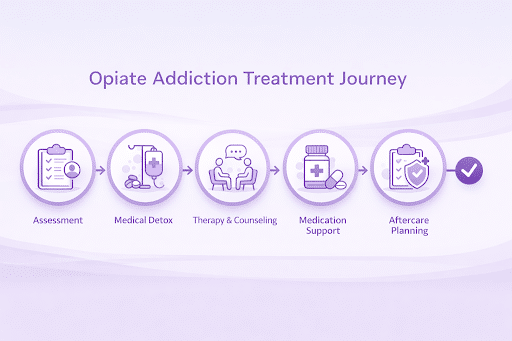
Beginning treatment can feel overwhelming, but understanding the process can help ease concerns. Most individuals can expect:
- Comprehensive medical and clinical assessment
- Medically supervised detox (if needed)
- Medication management and stabilization
- Individual and group therapy sessions
- Development of a personalized relapse prevention plan
- Aftercare and continuing recovery support
This structured approach ensures both physical stabilization and long-term behavioral change.
How Long Does Opiate Addiction Treatment Take?
The length of treatment varies depending on each person’s needs, severity of opioid dependence, and co-occurring mental health conditions. Some individuals may complete detox in several days, while ongoing treatment and recovery support may continue for several months or longer.
Longer engagement in treatment is associated with better long-term recovery outcomes and reduced risk of relapse.
Risks of Not Seeking Treatment for Opioid Addiction
Untreated opioid addiction can lead to serious health risks, including:
- Increased overdose risk
- Worsening physical dependence
- Mental health decline
- Relationship and career consequences
- Higher likelihood of relapse after periods of abstinence
Professional treatment significantly lowers these risks and provides tools for sustained recovery.
Why Choose Southeast Detox for Opiate Addiction Treatment
At Southeast Detox, we provide compassionate, medically supervised care designed to meet individuals wherever they are in their recovery journey. Our approach combines medical expertise, evidence-based therapies, and individualized treatment planning to support safe detox and long-term recovery.
We understand that every recovery journey is unique, which is why we tailor each treatment plan to the individual’s clinical needs, substance use history, and personal goals.
Start Opiate Addiction Treatment Today
If you or a loved one is struggling with opioid addiction, help is available now. Our admissions team is available 24/7 to answer questions, verify insurance benefits, and guide you toward the safest next steps in treatment.
Recovery is possible, and professional support can make all the difference.
Call today to speak confidentially with our admissions specialists and begin your path to recovery.
Your Recovery Starts Here
Our admissions team is ready 24/7 to guide you through the process, from admission to coordinating travel, treatment programs, and more.