Medical Detox
The Relapse I Hid From Everyone: How a Medical Detox Program Helped Me Stop Lying to Myself

Written By

Medical Detox
Written By
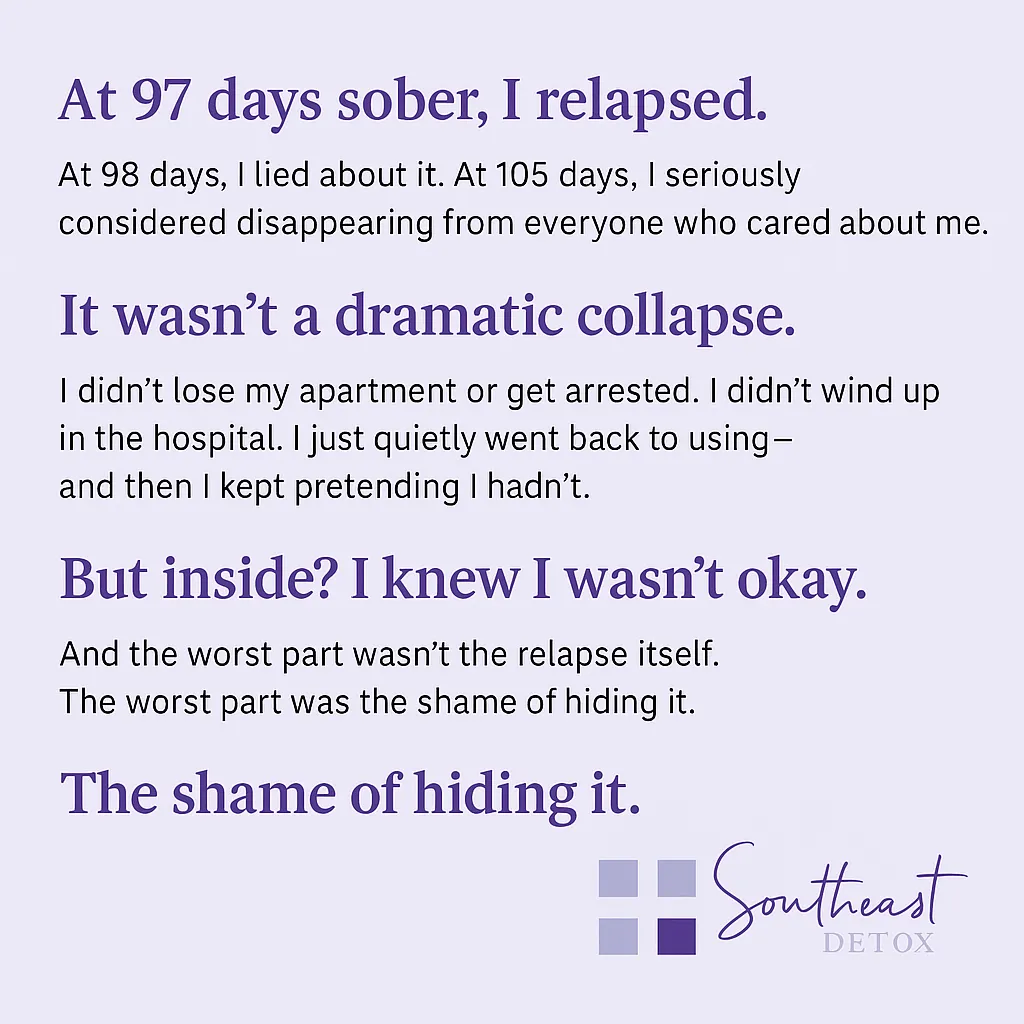
At 97 days sober, I relapsed.
At 98 days, I lied about it.
At 105, I seriously considered disappearing from everyone who cared about me.
It wasn’t a dramatic collapse. I didn’t lose my apartment or get arrested. I didn’t wind up in the hospital. I just quietly went back to using—and then I kept pretending I hadn’t.
I showed up to work. I replied to texts. I even hit a meeting or two and said, “Still going strong.”
But inside? I knew I wasn’t okay.
And the worst part wasn’t the relapse itself.
The worst part was the shame of hiding it.
This is what helped me come back from that spiral—and why I now believe that a medical detox program can be the first honest step for people who feel too far gone, too embarrassed, or too “not bad enough” to ask for help again.
You know the story.
The “I was overwhelmed.”
The “It was just one.”
The “I’ll stop tomorrow.”
I had made it through the hardest part—early withdrawal, cravings, cravings about cravings. I had over 90 days and a rhythm that felt sustainable.
Until one day, I had a fight with someone close to me. I felt that old edge in my chest—the kind that used to only quiet down with a drink. I told myself I could just have one.
And I did.
And then another.
And then I couldn’t stop the excuses.
High-functioning relapse is dangerous because it’s easy to hide. I wasn’t passed out. I wasn’t blowing up my life. I was still showing up. But I was emotionally gone—trapped in guilt, shame, and this sick loop of “I’ll clean up tomorrow.”
I skipped therapy. I ignored my sponsor. I avoided anyone who might see through me.
But I couldn’t avoid myself.
I felt like a fraud. Like every day I kept lying about being sober, I was disqualifying myself from recovery. That’s how addiction gets you. Not just through use—but through the isolation that follows it.
I thought they’d be disappointed.
I thought I didn’t deserve another chance.
I thought I had ruined the story I had started to believe about myself.
And let’s be real: I was ashamed to show back up with my tail between my legs. I had already “graduated” from the program. I had people rooting for me. I had posted the coin on Instagram.
But here’s the truth: relapse doesn’t erase progress.
It reveals where you still need help.
And I needed more help than I wanted to admit.
I didn’t think I needed detox again. I wasn’t using that much. I wasn’t in physical danger. But when I tried to stop cold turkey, the symptoms came back harder than I remembered.
Sweats. Shakes. Panic. Insomnia.
The mental withdrawal hit even harder—waves of self-loathing, mood swings, a weird sense of unreality.
I knew if I kept trying to fix it alone, I’d keep relapsing. That’s when I started researching medical detox programs.
Not as punishment. Not as rock bottom. But as a safe place to reset—and finally tell the truth.
Walking through the doors was terrifying. I was convinced someone would say, “Didn’t you already do this?”
Instead, the intake coordinator looked me in the eye and said, “We’re glad you’re here.”
There were no lectures. No side-eyes. No shame.
They checked me in gently, explained everything clearly, and let me rest. The medical staff monitored my symptoms without making me feel weak. When I panicked about whether I was “wasting space,” one of the nurses said, “This place is here for moments just like this.”
That sentence broke something open. In a good way.
The biggest gift detox gave me wasn’t meds or meals (though both helped). It was space to stop pretending.
For the first time in weeks, I didn’t have to perform recovery. I didn’t have to smile. I didn’t have to spin it. I could just be honest: I was scared. I felt broken. I hated that I still needed help.
And instead of being told to “get it together,” I was told:
That’s the kind of care Southeast Detox offers. Not pity. Not pressure. Just presence.
After a few days, my body started stabilizing. I slept. I cried. I talked.
By day four, I felt something I hadn’t felt in a while: relief.
Not relief that everything was fixed—but that I didn’t have to lie anymore.
We worked on a discharge plan that felt honest. No promises I wasn’t ready to keep. No “you should be doing this” pressure. Just clarity.
And when I left, I didn’t feel like a failure trying again.
I felt like a human who was brave enough to stop the slide before it got worse.
I know the shame of showing back up.
The internal monologue that says, “You should know better.”
The voice that says, “You don’t get another try.”
That voice is lying.
If your relapse is still quiet—if you’re functioning, smiling, working, posting—it’s easy to convince yourself it’s not “that bad.”
But the truth is:
If you’re using and hiding, you’re suffering.
And if you’re suffering, you deserve support.
A medical detox program in Atlanta won’t solve everything. But it might be the safest place to finally tell the truth.
No. Detox isn’t just for crisis—it’s for stabilization. If you’re having withdrawal symptoms or can’t stop on your own, medical detox provides a safe, supported restart.
Not at Southeast Detox. Many of their staff have been in recovery themselves or worked with hundreds of clients who’ve relapsed. They focus on care, not shame.
Recovery isn’t linear. You’re not starting over—you’re continuing with more insight. Relapse doesn’t erase progress. It’s a data point, not a death sentence.
You don’t have to tell everyone today. Start with one honest conversation—with the detox team, a peer, or someone who gets it. That first truth opens the door to healing.
If your body is struggling, your mind feels stuck, or you’re afraid of what’s coming if you keep using—detox is worth considering. It’s not a sign of failure. It’s a smart, self-respecting move.
Call 706-873-9955 or visit Southeast Detox’s medical detox program page to talk to someone who’s seen it all—and still believes people can come back stronger. You don’t have to hide your relapse. And you don’t have to figure it out alone.