Medical Detox
The Medical Detox Program That Didn’t Treat Me Like I’d Failed

Written By

Medical Detox
Written By
At five years sober, I didn’t think I’d be back in a treatment center.
Scratch that—I didn’t think I’d need to be. I wasn’t drinking. I wasn’t using. I was doing everything recovery told me to do: sponsoring, speaking, meditating, journaling, even drinking the green smoothies.
And I still felt… gone. Like I was there, but not really there.
So yeah, when I showed up at a medical detox program, I had a pretty complicated relationship with the word help.
Recovery didn’t break me. It just stopped holding me.
I wasn’t craving substances. I was craving feeling. Presence. Something real.
Instead, I was flatlining emotionally. Laughing at the right times, crying when it was “appropriate,” but inside? It felt like wallpaper. Like I’d built this perfect sober life and then backed out of it, slowly, from the inside.
No one really talks about that—the kind of stuck where nothing is technically wrong, but everything is kind of wrong.
That’s where I was when I walked through Southeast Detox’s doors. Not to be rescued. Just to not feel like a fraud anymore.
I told one of the nurses I had five years. She didn’t say “That’s amazing!” or “You’re so strong!” She said:
“That’s a lot of time to carry this stuff.”
And I almost cried.
Because the truth was, I’d been carrying too much for too long—and mistaking that weight for progress. Every time I felt off, I doubled down on doing more recovery “right.” More meetings. More service. More pretending I was fine because shouldn’t I be fine by now?
But the exhaustion had caught up to me. And in that detox room, for the first time in a long time, I didn’t have to explain it away.
Let’s be clear: I wasn’t in full-blown withdrawal. I hadn’t relapsed.
But my body was fried. I wasn’t sleeping. I was anxious all the time. I couldn’t turn my brain off. My digestion was wrecked. My jaw felt like it was made of cement from how tightly I clenched it at night.
And guess what? The staff at Southeast Detox took that seriously.
They ran labs. Checked my sleep. Asked real questions. Offered adjustments—not assumptions. That’s what a good medical detox program should do: meet the whole person, not just the substance story.
For years, I thought feeling disconnected was something I had to power through. That the slump was a test I was supposed to pass on my own.
What I learned instead is that disconnection is a signal. Not of failure. Of need.
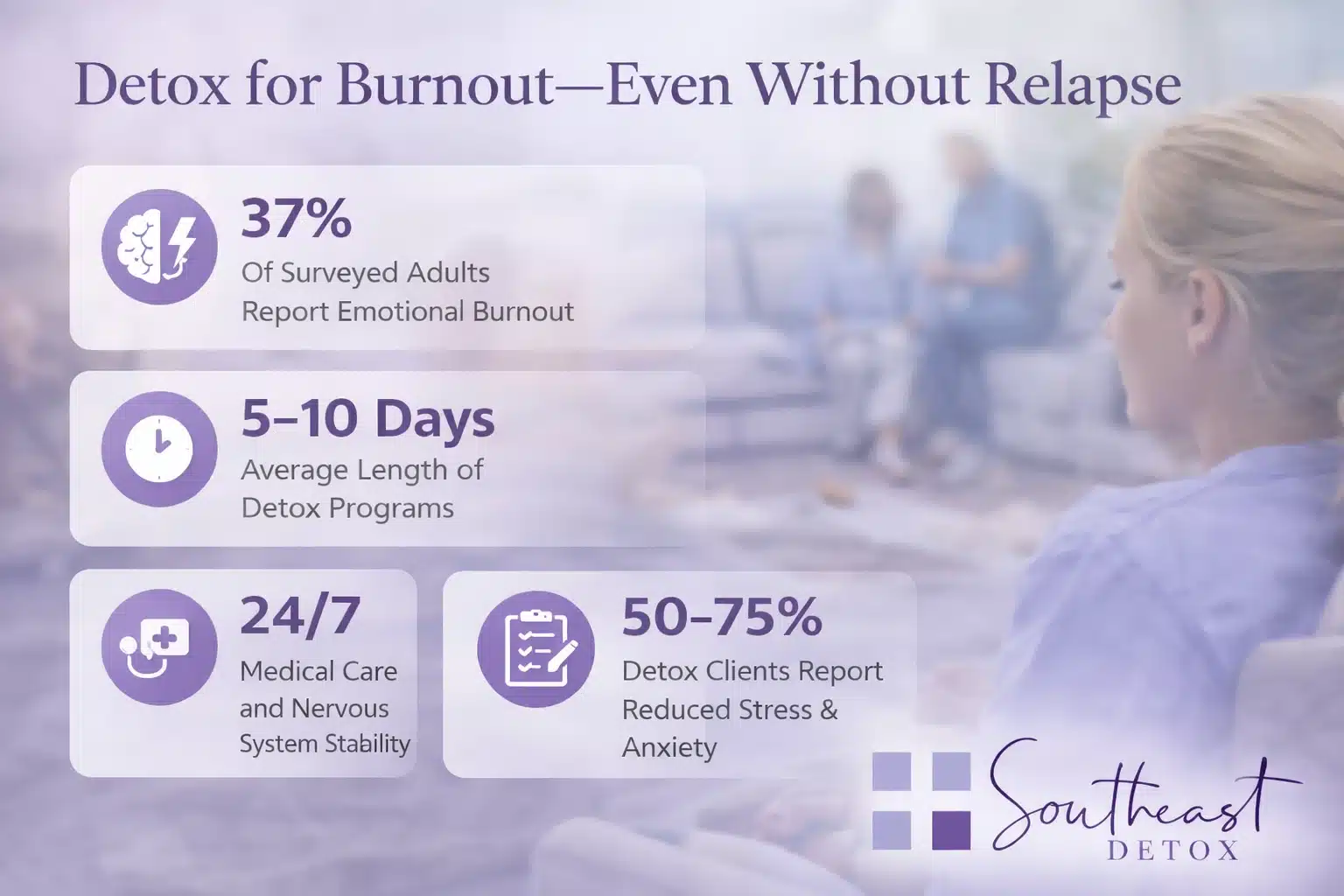
In detox, I finally gave myself permission to feel that need without shame. To let my nervous system rest. To let my body recalibrate without trying to justify why I needed help when I hadn’t “relapsed.”
It wasn’t a step back. It was a step in.
You know what I expected? To be told I didn’t qualify. To be told, “You’re not using—why are you here?”
That never happened.
Instead, I heard, “Your experience is valid. Exhaustion is valid. Emotional burnout is valid.”
No box to check. No emergency required.
That might be the most powerful part of my stay: I was treated with respect, not regret. No one acted like I’d failed. They just treated me like a human who needed support. And for someone years into recovery, that made all the difference.
People think detox is about getting substances out of your system.
And yeah, it can be that.
But it can also be about clearing out the emotional static that builds up over years of being “fine.” About giving your body and mind a chance to reset without pressure. Without pretending.
That’s what Southeast Detox gave me.
Time to rest. Time to reflect. Time to stop performing recovery and actually feel my way back into it.
No timelines. No stage lights. Just honesty and quiet support.
If you’re years into sobriety and you feel hollow—emotionally tired, flat, or like you’ve wandered too far from yourself—you’re not broken.
You’re not failing.
You’re human.
And maybe what you need isn’t to double down on doing more. Maybe you need to pause. Breathe. Let your body catch up. Let your heart get quiet enough to speak.
If you’re anywhere near help in Metro Atlanta, Southeast Detox is the kind of place that gets it. That sees emotional burnout as real. That treats long-term alumni with the dignity we sometimes forget to offer ourselves.
Can you go to detox if you haven’t relapsed?
Yes. Detox isn’t only for substance withdrawal. Many long-term recovery clients seek detox for emotional or physical burnout, nervous system support, or medication adjustment in a safe, monitored setting.
Will staff judge me for needing help “this far in”?
No. At Southeast Detox, every person is met with respect, regardless of where they are on the recovery timeline. Emotional exhaustion, anxiety, insomnia, or medical needs are all valid reasons to seek support.
What does detox look like for someone not in active withdrawal?
You’ll still receive full medical support—labs, assessments, sleep and nutrition guidance, and nervous system stabilization. Detox can serve as a restabilization window for your body and mind.
Do I have to commit to a full rehab stay afterward?
No. Detox can be a standalone experience or a bridge to other levels of care. You’ll work with the team to determine what feels right based on your needs—not a one-size-fits-all plan.
Is this covered by insurance if I haven’t used recently?
Coverage depends on your plan, but Southeast Detox works with many providers and can help you verify benefits discreetly. Needing support doesn’t require a relapse to be legitimate.
Call 706-873-9955 to learn more about our medical detox program in Metro Atlanta, Georgia.